
Every year, we select and train the England Schools Debating Team.
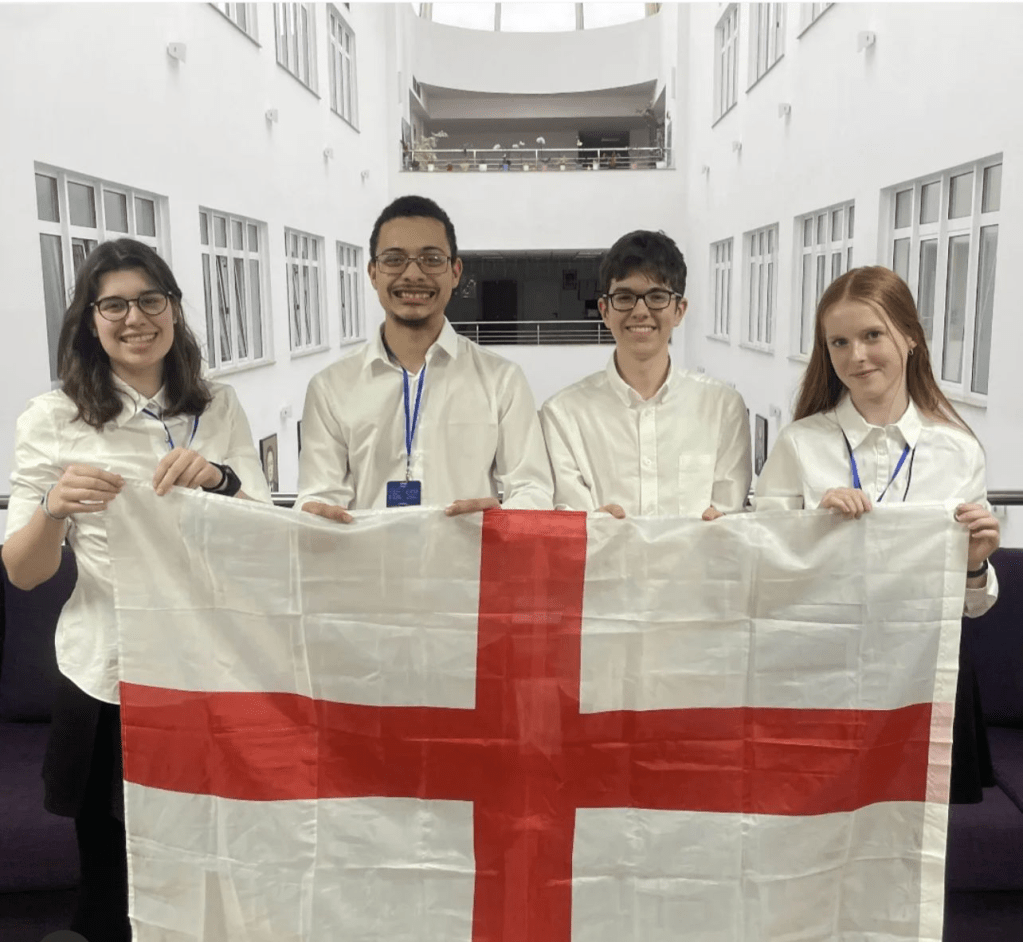
The team of five pupils, accompanied by a Team Coach and a Team Manager, will represent the country at the annual World Schools Debating Championships and the European Schools Debating Championships.
This year’s team will represent England at the 2026 European Schools Debating Championships (Skopje, Macedonia) and the 2026 World Schools Debating Championships (Nairobi, Kenya).
We also select and train an additional four to six pupils for England B, a training squad with a focus on the future.
England B will primarily consist of pupils in Year 12 and below, and will also have the opportunity to compete at the European Schools Debating Championships.
Applying for the England Schools Debating Team
Timeline
Applications typically open in September each year, with the first round of selections taking place in-person in October.
Selected pupils will join the England Squad and participate in a training programme throughout the remainder of the calendar year.
The final line-up of Team England will be selected from this group of pupils and confirmed before March of the following year.
Process
The application process typically involves:
- An online application, which collects information about applicants’ debating experience (e.g., tournaments attended, competitive results, level of coaching received)
- (Only for long-listed applicants) In-person tryouts, which consist of live debate rounds overseen by experienced coaches and judges
Eligibility
To be eligible for Team England, you must be:
- Attending a registered school in England
- Between 14 and 20 years of age as of the dates of the upcoming WSDC (exact dates will be released ahead of applications)
- Available and legally permitted to travel to the WSDC host country
- Willing and able to commit significant time to training and preparation ahead of WSDC
More detailed information will be publicised ahead of each year’s applications.
What do we typically look for?
Debate England is strongly committed to widening participation. We are “needs blind” in our selections for all our programmes, and actively welcome applications from historically under-represented groups. Where required, targeted financial and welfare support is available for anyone who may be otherwise prevented from participating.
We are interested not just in demonstrated ability (i.e. track record of competitive success), but in potential, especially in promising younger pupils.
We understand that not all schools have active debate clubs, and that not all pupils who are interested in debating have the opportunity to attend competitions or receive coaching support. In such cases, we consider factors such as academic ability, success in related disciplines (e.g., public speaking competitions), and engagement with open access resources (e.g., recorded debate workshops and debate rounds).
 Debate England